
Our Equipment
Plant we own and operate directly, available for deployment without third-party hire.
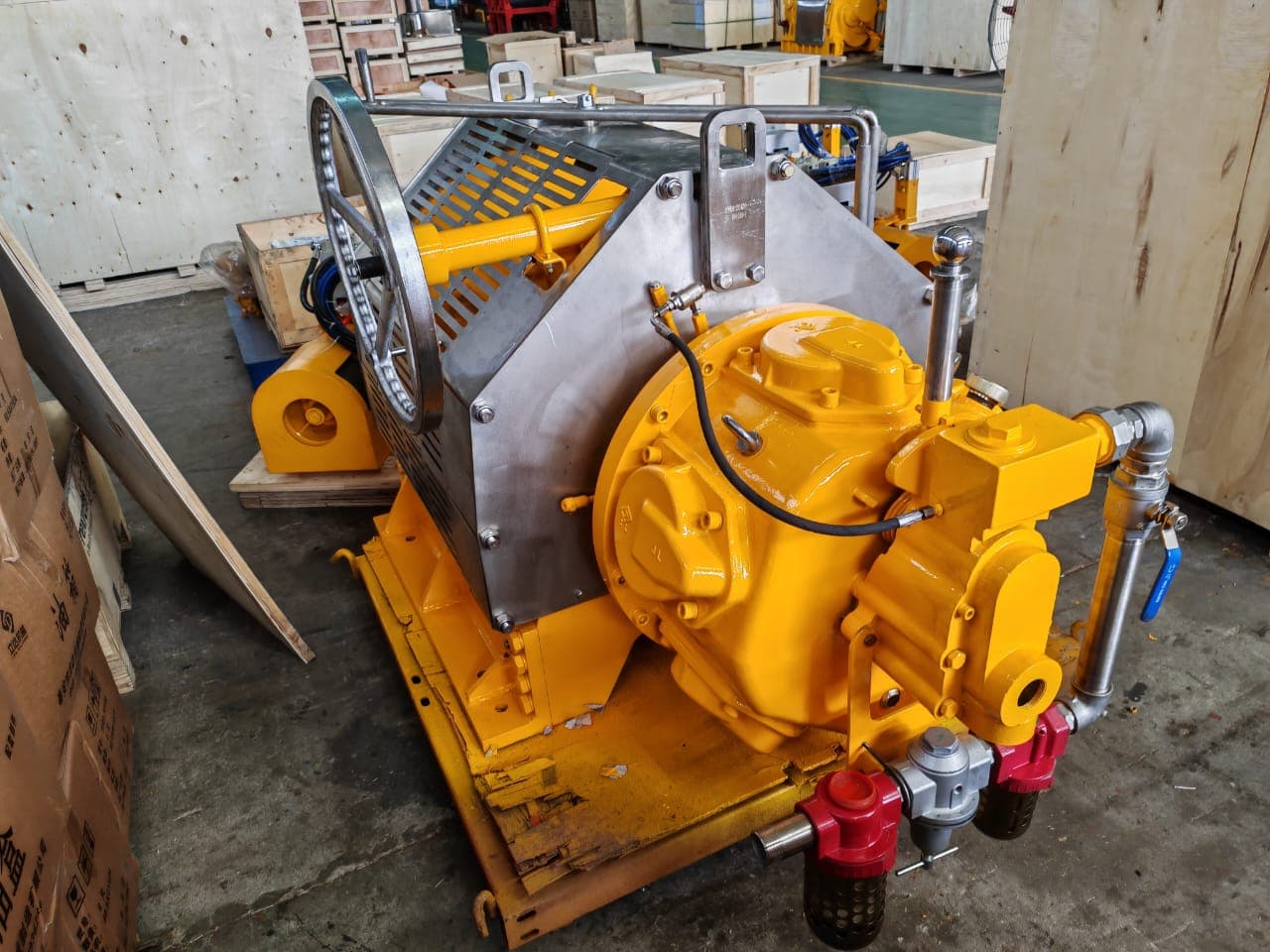
High Pressure Hydro Jetting Machine
×5High-Pressure Hydro Jetting Machine Elatronics Ventures’ High-Pressure Hydro Jetting Machines are designed for powerful and efficient cleaning, descaling, and maintenance of industrial equipment, pipelines, heat exchangers, tanks, and process systems. Using high-pressure water jets, the system effectively removes stubborn deposits, scale, sludge, rust, grease, and other contaminants without the need for abrasive cleaning materials. Built for demanding industrial applications, our hydro jetting systems can be configured to meet specific pressure, flow-rate, and operational requirements. They are suitable for use across oil and gas, petrochemical, marine, power generation, manufacturing, and other heavy industrial environments. Our systems are engineered for reliable performance, ease of operation, and safe maintenance, providing an environmentally responsible solution for industrial cleaning and surface preparation.
- Triplex / Plunger Pump
- 250–1,000 bar Maximum Pressure
- 500–800 bar Operating Pressure
- 30–150 L/min Water Flow Rate
- Diesel Engine / Electric Motor Drive System
- 30–150 HP of Engine Power
- Clean Water Supply
- Made of Stainless Steel / Industrial Alloy
- High-Pressure Jetting Nozzles
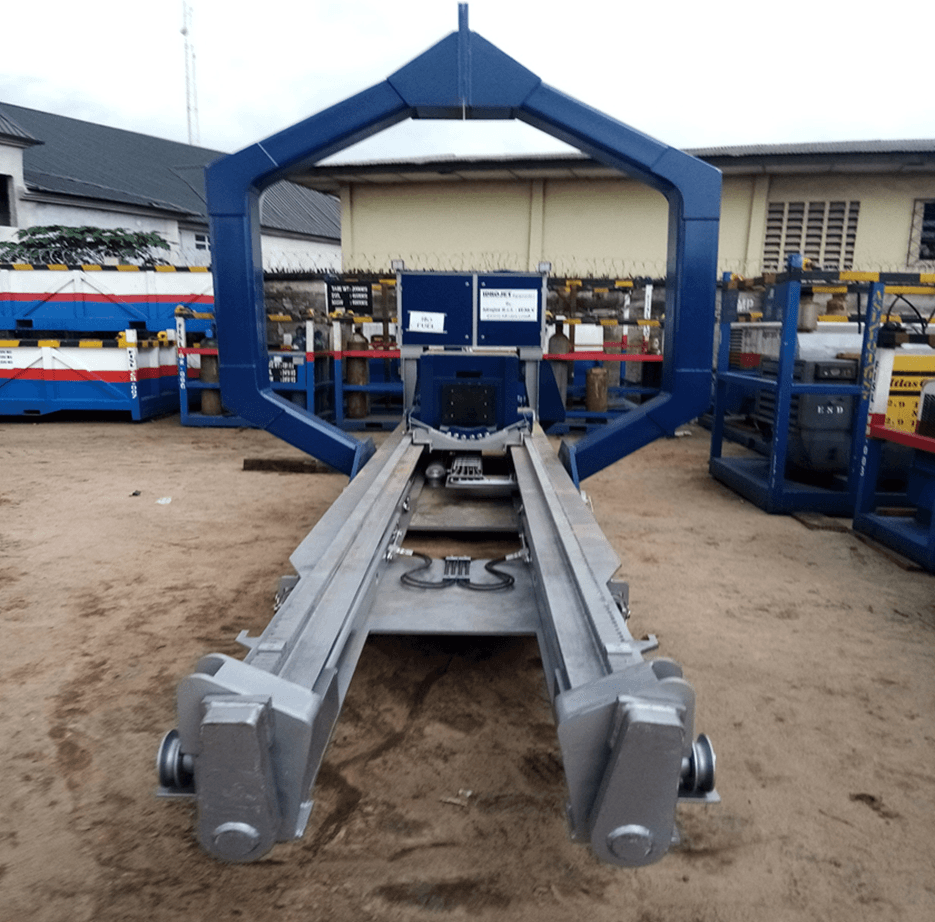
Hydraulic Tube Bundle Puller / Extractor
×2This is designed to extract heavy tube bundles from shell-and-tube heat exchangers during inspection, cleaning, repair or replacement. The long twin-rail structure supports the bundle while the pulling mechanism applies controlled hydraulic force to move the bundle horizontally out of the exchanger shell. The large blue overhead frame provides structural support and helps guide/stabilize the extraction operation. The hydraulic pulling mechanism at the rear/front of the machine is connected to the bundle, allowing operators to extract a heavy bundle without relying solely on cranes or manual handling. Main Components Visible Hydraulic pulling/extraction mechanism Twin heavy-duty support rails Bundle support carriage Hydraulic hoses and fittings Structural overhead support frame Bundle gripping/connection assembly Heavy-duty base/frame Guide rollers/support wheels Typical Applications This type of equipment is commonly used for: Shell-and-tube heat exchanger maintenance Tube bundle removal Tube bundle installation Heat exchanger cleaning Tube inspection and repair Refurbishment and turnaround operations Refinery maintenance Petrochemical plants Oil & gas facilities Power plants Chemical processing plants
- Maximum Pulling capacity
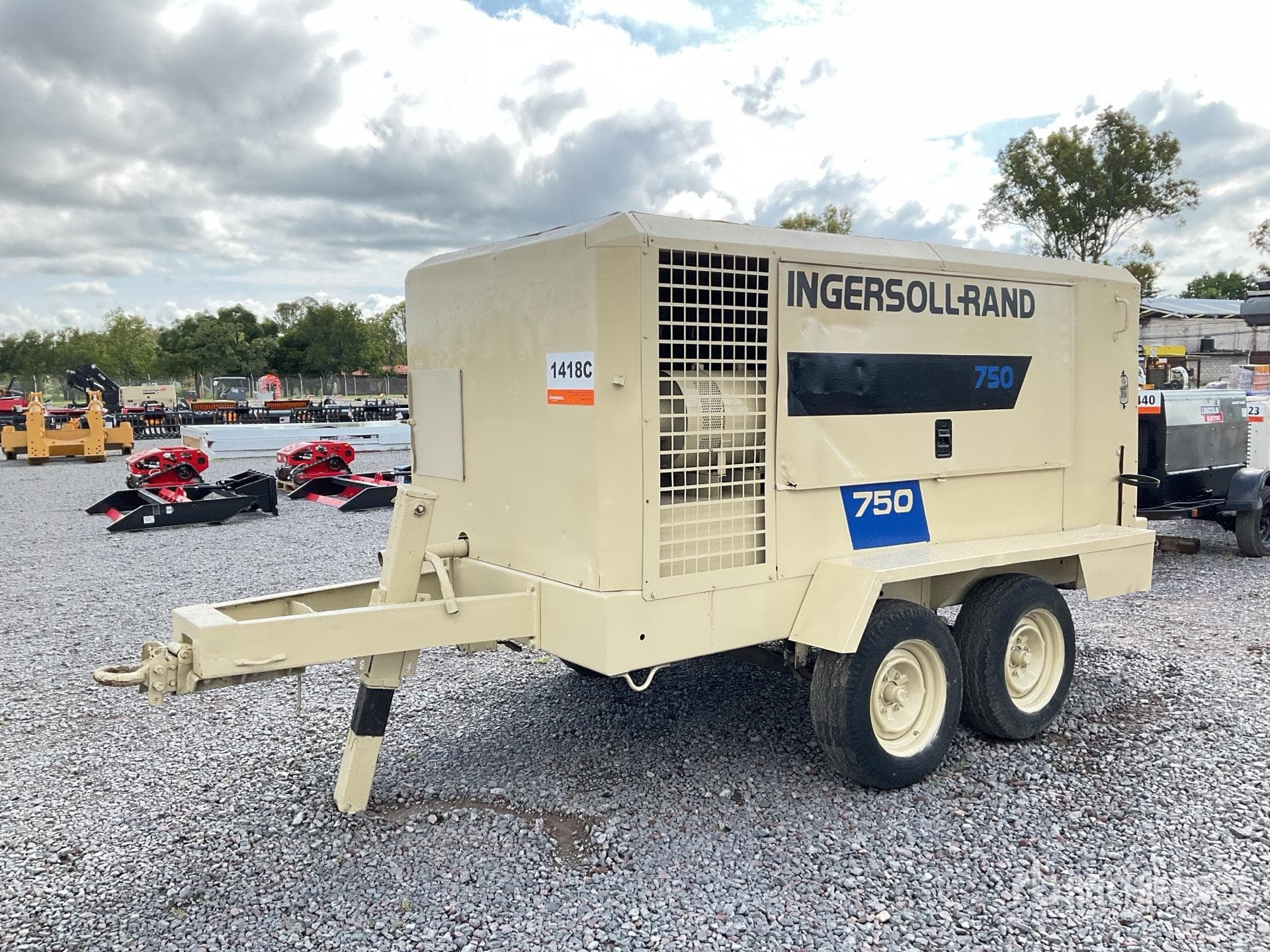
Ingersoll Rand XP750 Portable Air Compressor
×4The Ingersoll Rand XP750 is a heavy-duty, diesel-powered portable rotary screw air compressor designed to supply a large volume of compressed air at construction sites, industrial facilities, drilling operations and other demanding applications. The unit compresses atmospheric air using a rotary screw airend and delivers approximately 750 cubic feet of compressed air per minute. Its enclosed housing protects the engine and compressor components while the large ventilation grille provides cooling airflow. The XP750 is particularly suited to applications where high-volume compressed air is required at locations without reliable electrical power. Typical Applications Construction sites Pneumatic drilling Rock drilling Road construction Sandblasting Concrete work Mining and quarrying Pneumatic tools Pipeline construction Industrial maintenance Oil & gas field operations
- For the XP750WCU configuration, published specifications include a Cummins 8.3 L six-cylinder diesel engine, 260 hp (194 kW), 2,000 RPM rated speed, 750 CFM air delivery and 125 PSI operating pressure. The published fuel capacity is 122 US gallons (462 L).
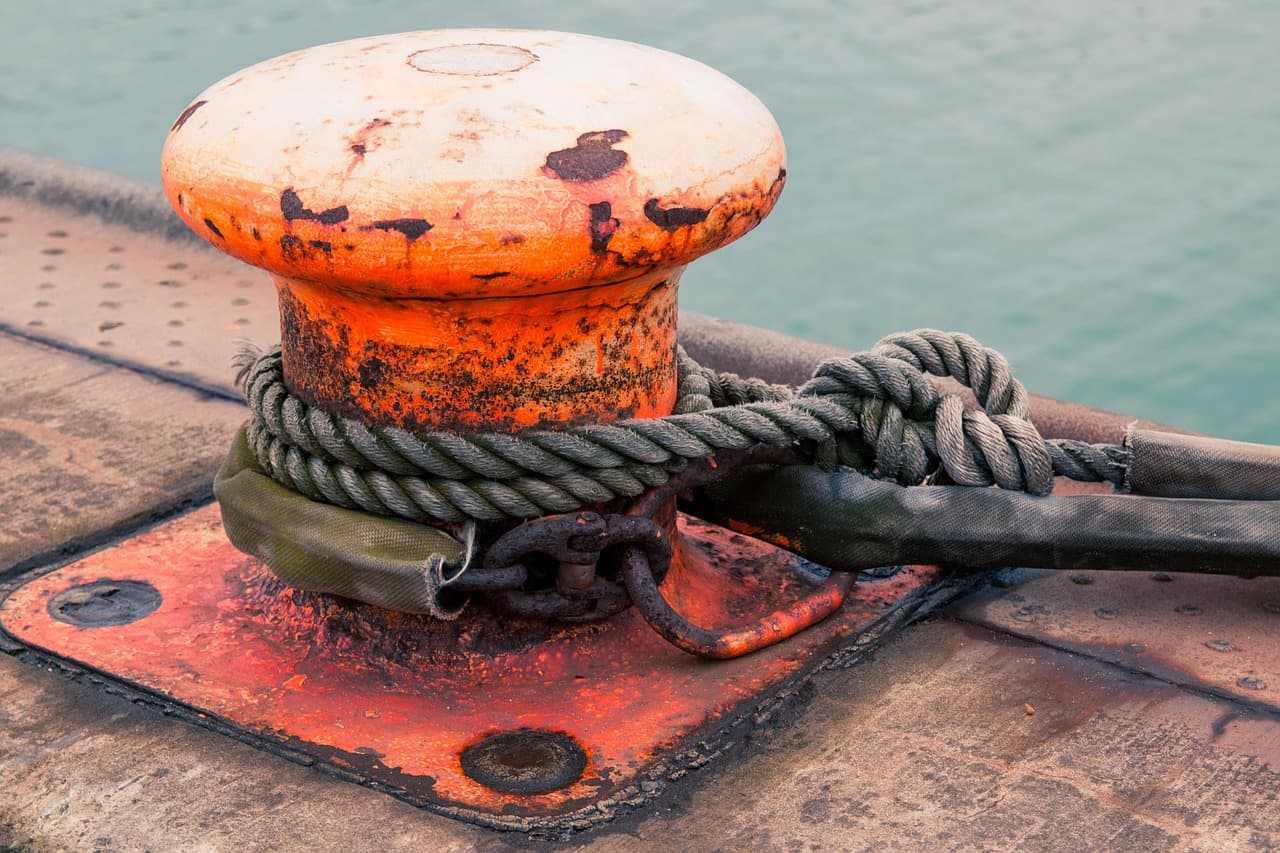
Mooring BOLLARD
This is a mooring bollard, a sturdy metal post anchored to a ship's deck or a dock. Its main job is to provide a secure anchor point for holding a vessel in place while it's docked . ⚙️ Key Functions Holding the line: To keep a ship from drifting away, strong ropes are looped around this robust base. Creating tension: The thick rope in the photo is wrapped in a few loops to create friction. This way, a single person can safely hold and adjust a heavy vessel using the bollard's grip, rather than relying solely on brute strength . Protecting the gear: The visible fabric sleeve wrapped around the rope's link helps stop the rough metal from scraping and fraying the fibers, keeping the mooring line durable. 🛠️ When a ship is docking, a sailor throws a mooring line to shore or connects a rope from the ship's winch to this fixture. Adjusting the number of wraps around the bollard is the standard method for skillfully managing the tension. The rusty surface on your photo suggests it's in the high-salt environment of a harbor, but its basic task remains the same: to act as a secure, weather-resistant "handle" that keeps the boat exactly where it should be .
Need a specific unit on site?
Tell us the scope and we will confirm availability.